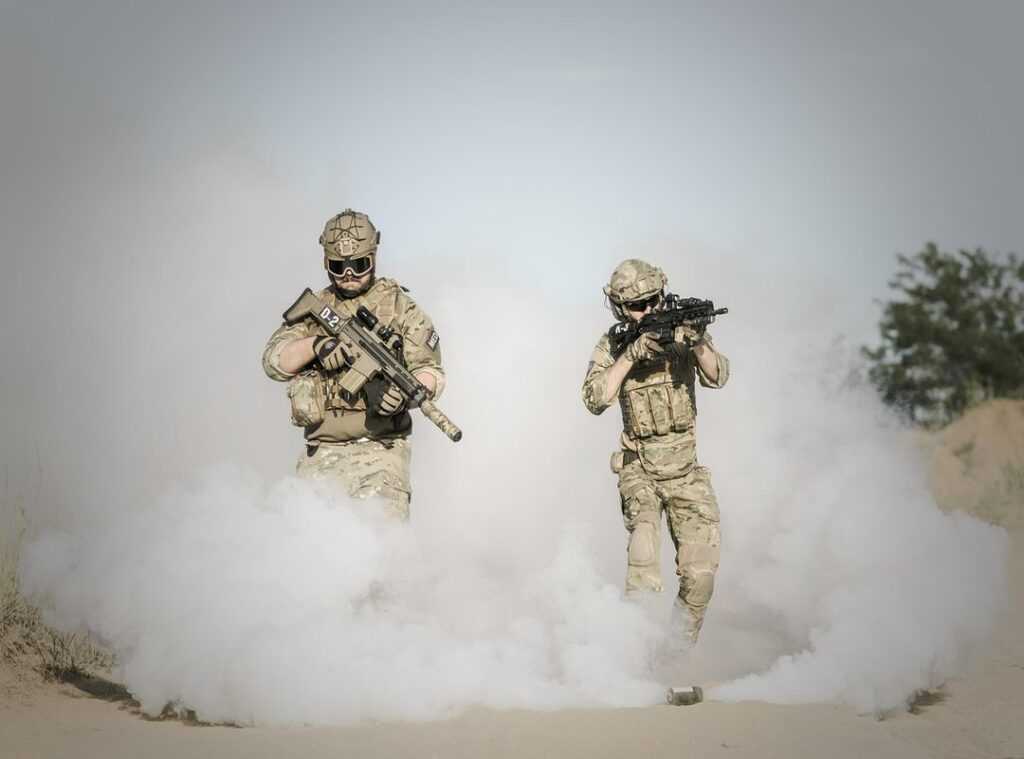

If you’re searching for a real edge in Red War, you’re likely tired of generic tips that don’t hold up in competitive matches. This guide is built for players who want practical, battle-tested insights they can apply immediately—whether you’re climbing ranked ladders, refining your loadouts, or trying to outmaneuver high-skill opponents.
We break down the mechanics that actually decide fights: timing windows, ability rotations, counterplay patterns, and the often-overlooked power of map positioning strategy. You’ll learn how to read battlefield flow, anticipate enemy rotations, and turn small tactical advantages into decisive wins.
Our analysis is grounded in extensive match reviews, meta tracking, and hands-on testing across multiplayer modes. Instead of theory, you’ll get clear breakdowns of what works right now in the current Red War environment—so you can progress faster, win smarter engagements, and stay ahead of the evolving meta.
Superior aim should win fights, right? Yet countless players lose duels despite landing first shots because they ignore geometry. The real problem isn’t reaction time; it’s failing to weaponize cover, sightlines, and elevation. In competitive shooters, high-ground players win roughly 60% more opening engagements, according to map heatmap analyses. In other words, angles beat accuracy. So here’s the promise: learn a repeatable framework for map positioning strategy that works across modes and maps, boosting control and K/D. For example, anchoring near choke points forces predictable pushes. Meanwhile, rotating after every kill denies revenge trades (yes, spawn logic matters). Master placement
The Three Pillars of Map Control: Spawns, Sightlines, and Chokepoints
Understanding the strategic positioning outlined in “Reading the Map: Strategic Positioning for Maximum Advantage” is crucial for players looking to navigate the evolving landscape of competitive play, especially in light of the insights from our article on the “Top Gaming Trends Dominating Competitive Play This Year.
Map control isn’t flashy, but it wins matches (and yes, I’ll die on that hill). In my experience, the teams that understand map positioning strategy dominate long before the scoreboard reflects it. Let’s break it down.
-
Dominating Spawns
A spawn is where enemies re-enter the map after elimination. Spawn trapping means locking opponents into predictable respawn zones, while map pressure is the act of occupying space so aggressively that the enemy has nowhere safe to appear. Spawns typically flip when your team pushes too deep into enemy territory. For example, if the objective sits mid-map and your squad floods the back corner, expect enemies to respawn behind you. Instead, hold a perimeter—leave one anchor player near mid to stabilize control. Push together, clear lanes, then stop short of the deepest spawn tile. Controlled aggression beats reckless flipping every time. -
Controlling Sightlines
A sightline is any long corridor or open area where players can see and shoot from distance. Holding an angle—pre-aiming a tight corner—leverages peeker’s advantage (the split-second delay before an opponent registers you). Aggressive peeking works when you have intel or superior aim. Patient angle-holding? That’s for objective defense. Personally, I favor patience; overextending into open lanes feels like volunteering for a highlight reel. -
Locking Down Chokepoints
Chokepoints are narrow, high-traffic paths. Set up crossfires so two players watch intersecting angles. Add grenades or traps to punish pushes. When done right, it feels less like defense and more like building a wall the enemy simply can’t cross.
The Unfair Advantage: Abusing Verticality and Cover
The Power of High Ground
High ground isn’t just cinematic flair (sorry, Anakin). It’s math. When you’re elevated, your crosshair naturally aligns with enemy heads, while opponents must fight recoil and angle disadvantage to hit yours. Higher vs lower positioning becomes a duel of exposure: you see their full body; they see a sliver of yours.
Take a central rooftop overlooking a control point. Secure it early and you force enemies into predictable lanes. That’s smart map positioning strategy—claim the angle that dictates movement before the first firefight even starts.
Effective Cover Usage
Not all cover is equal:
- Hard cover – Concrete walls, thick barriers. Bullets stop. You’re safe.
- Soft cover – Wood, thin metal. Looks safe. Isn’t.
Choosing hard vs soft cover can mean surviving an extra second—often the difference between clutch and respawn.
Then there’s head-glitching: position behind hard cover so only your head is visible while your bullets clear the obstacle. It feels unfair (because it kind of is).
Movement and Cover
Cover-to-cover movement beats sprinting in the open. Advance by “slicing the pie”—clear corners incrementally, revealing minimal angles at a time. Compare that to wide-swinging a doorway: maximum exposure, minimum lifespan. Slow is smooth. Smooth wins fights.
Dynamic Placement: How to Adapt Your Strategy Mid-Match

Reading the Flow of Battle
First, stop sprinting blindly. The kill-feed (the real-time list of eliminations) and mini-map are your live weather radar. If three teammates drop on the left lane, that’s not random—it’s a storm forming. Conversely, if your squad secures two quick picks, that’s your cue to push the advantage and take space.
However, aggression without awareness is how matches flip. Think of it like Avengers: Endgame—charge too early and you’re Star-Lord ruining the plan. If the kill-feed shows staggered deaths, fall back, regroup, and anchor a defensive angle instead.
Pro tip: wait for spawn timers to sync before pushing. A 4v2 is a green light; a 2v4 is a highlight reel waiting to happen.
For a deeper breakdown, see adapting mid match when to shift your strategy.
Objective-Based Positioning
Different modes demand different priorities. Your map positioning strategy must evolve.
| Game Mode | Priority | Ideal Placement |
|---|---|---|
| Domination | Control zones |
Hold triangular sightlines between flags |
| Search and Destroy | Information | Power positions near choke points | |
|---|---|---|---|
| Pillar | What to Do | ||
| Spawns | Predict rotations | ||
| Sightlines | Hold angles | ||
| Chokes | Control entry |
So, in your next three matches, focus only on high ground. Notice the difference immediately.
Dominate the Red War Battlefield
You came here to sharpen your edge in Red War — to understand the mechanics, outplay the multiplayer meta, and stop falling behind in crucial matches. Now you have the strategic clarity to make smarter decisions, adapt faster, and control engagements instead of reacting to them.
The truth is, most players lose not because of aim, but because they ignore map positioning strategy and fail to adapt to evolving combat dynamics. That frustration — getting flanked, out-rotated, or out-leveled — ends when you start applying what you’ve learned here.
Red War rewards players who think ahead, manage resources efficiently, and exploit positioning advantages. When you combine smart rotations, optimized loadouts, and progression hacks, you don’t just survive — you dictate the pace of the match.
Now it’s time to act.
Start implementing these tactics in your next session. Review your recent matches, adjust your loadout based on the current meta, and refine your map positioning strategy every round. Thousands of competitive players rely on our breakdowns to stay ahead of the curve — and the next win can be yours.
Queue up, apply the strategy, and take control of the battlefield.
 There is a specific skill involved in explaining something clearly — one that is completely separate from actually knowing the subject. Maria Evelandizer has both. They has spent years working with battle strategy breakdowns in a hands-on capacity, and an equal amount of time figuring out how to translate that experience into writing that people with different backgrounds can actually absorb and use.
Maria tends to approach complex subjects — Battle Strategy Breakdowns, Pro Perspectives, Multiplayer Meta Insights being good examples — by starting with what the reader already knows, then building outward from there rather than dropping them in the deep end. It sounds like a small thing. In practice it makes a significant difference in whether someone finishes the article or abandons it halfway through. They is also good at knowing when to stop — a surprisingly underrated skill. Some writers bury useful information under so many caveats and qualifications that the point disappears. Maria knows where the point is and gets there without too many detours.
The practical effect of all this is that people who read Maria's work tend to come away actually capable of doing something with it. Not just vaguely informed — actually capable. For a writer working in battle strategy breakdowns, that is probably the best possible outcome, and it's the standard Maria holds they's own work to.
There is a specific skill involved in explaining something clearly — one that is completely separate from actually knowing the subject. Maria Evelandizer has both. They has spent years working with battle strategy breakdowns in a hands-on capacity, and an equal amount of time figuring out how to translate that experience into writing that people with different backgrounds can actually absorb and use.
Maria tends to approach complex subjects — Battle Strategy Breakdowns, Pro Perspectives, Multiplayer Meta Insights being good examples — by starting with what the reader already knows, then building outward from there rather than dropping them in the deep end. It sounds like a small thing. In practice it makes a significant difference in whether someone finishes the article or abandons it halfway through. They is also good at knowing when to stop — a surprisingly underrated skill. Some writers bury useful information under so many caveats and qualifications that the point disappears. Maria knows where the point is and gets there without too many detours.
The practical effect of all this is that people who read Maria's work tend to come away actually capable of doing something with it. Not just vaguely informed — actually capable. For a writer working in battle strategy breakdowns, that is probably the best possible outcome, and it's the standard Maria holds they's own work to.